What’s happening this October?
A month-long programme at the Building Centre in London, exploring what regenerative design means in practice.
THURSDAY 1 October | 6.30PM
Regenerative Design 2026 launch party
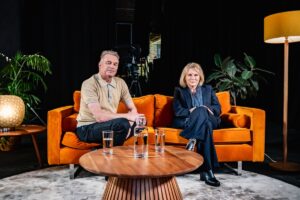
To celebrate this year’s RAI cohort, Architecture Today and Architects Declare invite all RAI member organisations to join us for the official RAI 2026 Launch Party and the opening night of Regenerative Design 2026. The evening will bring together architects, clients, consultants, contractors, policymakers and sustainability leaders from across the built environment to celebrate the organisations helping to drive regenerative practice forward. During the event, we will reveal the RAI 2026 front runners and formally launch Regenerative Design 2026 – a month-long exhibition and events programme hosted at The Building Centre throughout October.
Invitation only
Partner: Schüco UK & Ireland

Week 1
The regenerative benchmark and systemic change
A ‘scene-setting’ week exploring the broad principles of regenerative design, with events focused on meaningful definitions, workable benchmarks, systemic obstacles and overarching ambitions.
Monday 5 October | 8.30–11.30am
Paradigm shift: a new mindset for a regenerative world
Panel discussion
Seminar space
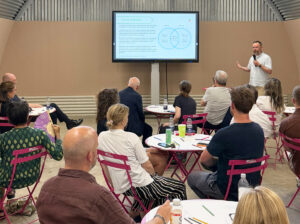
The journey towards regenerative design requires us to shed old habits and embrace new ways of thinking. As designers, we have agency to challenge current systems through goals, mindsets and policy. But the transition to regenerative design asked us to move from being solely designers to being stewards of materials, buildings, communities and ecosystems. What are the systemic changes required to ensure that our interventions strengthen, rather than deplete, the world in which we operate?
Elora Hardy, TED Talk speaker and founder of radical design studio IBUKU, will deliver the keynote opening talk, being joined by leading names from across the industry, including:
- Ivan Jovanovic, Director Sustainability and Environmental Design at Atelier Ten
- Duncan Baker Brown, Founder and Director of BakerBrown Studio
- Marian Garfield, Director of Sustainability at Heidelberg Materials UK
- Amin Taha, Founder and Director of Groupwork Kelly
- Alvarez Doran, Co-Founder of Ha/f Climate Design
Partner: Heidelberg Materials UK
Free to attend




Wednesday 7 October | 8.30–11.30am
Towards a regenerative supply chain
Breakfast roundtable discussion
Boardroom
How can we ensure that the supply chains we use integrate ethical and environmentally responsible practices? What are the most effective models for early collaboration across the supply chain to deliver the best possible results?
Partner: In Opera
Invitation only

Week 2
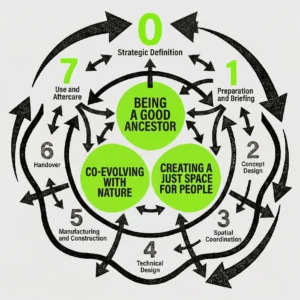
Being a good ancestor
How can we ensure that the decisions we make today deliver adaptability and flexibility for generations to come, and implement a shift in mindset towards truly long-term thinking?
Wednesday 14 October | 8.30–11.30am
Circularity and intelligent specification
Breakfast roundtable
Boardroom
How can we employ the principles of circular design to extend the lifespan of our existing building stock? And how can we make new buildings easier to adapt, disassemble and reuse? Circularity offers the potential to extend the lifespan of buildings and their materials, and reduce the construction sector’s impact on the environment. But its wholesale adoption calls for new models of design, procurement, occupation and cross-disciplinary collaboration. This panel discussion explores the ways manufacturers, design teams, clients and the public and private sectors can work together to accelerate the transition to circular design.
Partner: Interface
Invitation only


Thursday 15 October | 8.30–11.30am
Whole life carbon and adaptive reuse
Presentations and panel discussion
Seminar space
Reusing and retrofitting existing buildings offers a clear and sustainable alternative to demolishing and rebuilding, yet the UK demolishes 500,000 buildings every year. This session reviews current policies and barriers to change and looks at strategies for quantifying and communicating the whole-life carbon benefits of adaptive reuse and encouraging developers and clients to understand, improve and capitalise on the latent environmental, heritage, economic and social value of their existing assets.
Speakers include:
- Kiru Balson, Max Fordham
- Esther Robinson Wild, Robinson Wild: historic environment consultants
- Ian Poole, Elliott Wood Engineers
- Luke Richardson-Brown, Partner, Studio PDP
- Alexander Grigull, associate principal at Grimshaw
- Juliana Renn, Head of Sustainability, HLM Architects
Partners: Max Fordham and HLM Architects
Free to attend
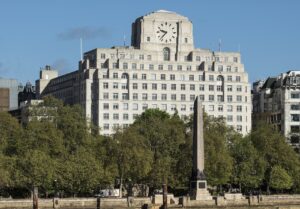


Thursday 15 October | 6.30–8.30pm
Future Build by Will Arnold
Industry Book Launch Party
Ground floor gallery
Join us to celebrate the launch of Will Arnold’s new book, Future Build: How Construction Can Heal Our Planet. The first time that regenerative design has been discussed in a public-facing non-fiction book, this marks a turning point in convincing the public regenerative architecture is not just possible, it’s the only possibility. Join industry-leading speakers for an evening of networking around the theme of activating our collective voice in engaging the public on this vital topic.
Speakers include:
Will Arnold, engineer, environmentalist and head of sustainable materials at Useful Simple Trust
Katie Clemence Jackson, CEO of the UK NZCBS
Chris Wise, founder of Useful Simple Trust and Expedition Engineering
Michael Pawlyn, founder of Exploration Architecture and co-founder of UK Architects Declare
Pippa Horton, co-founder of ReClinker, the world’s first cement recycling technology
Partner: Useful Simple Trust
Limited free places for RAI members

Week 3
Co-evolving with nature
What are the implications of recognising that we are part of, rather than separate from, the natural world? How can we actively regenerate ecosystems by learning from and working with natural systems?
Tuesday 20 October | 8.30–11.30am
Specifying natural and sustainable construction materials
Presentations and panel discussion
Seminar space
Sourcing natural and sustainable construction materials can present various challenges, but addressing these hurdles is crucial for promoting environmentally responsible and socially conscious building practices. This session explores the issues around availability, cost considerations, certification and standards, quality and performance, education and awareness, regulatory compliance, supply-chain transparency and local sourcing. Architects, engineers, materials specialists and policy experts share case studies and applied research.
Speakers include:
Siri Zanelli, Founding Partner, Collective Works
Lee Fox, Project Architect, BakerBrown Studio
Rowland Keable, Director, Rammed Earth Consulting
Anna Hollyman, CoDirector – Policy & Industry Intelligence, UKGBC
Eleonora Regni, Webb Yates Engineers
Jordan Panayi, GROUPWORK
Jim Matthews, Managing Director, H.G. Matthews
Partner: H.G. Matthews
Free to attend

Wednesday 21 October | 8.30–11.30am
Circularity, biodiversity and closed loop design
Breakfast roundtable discussion
Boardroom
Biodiversity is vital for healthy ecosystems and wellbeing. This roundtable discussion asks how a circular economy and closed-loop design can reduce the impacts of unsustainable production and consumption systems on biodiversity and help repair ecological damage while creating places that enable human and non-human life to flourish together.
Partner: Heidelberg Materials UK
Invitation only


Week 4
Creating a just space for people
How can we design processes to foster social connection, economic opportunity, wellbeing and the shared sense of stewardship that allows communities to self-organise and build resilience?
Tuesday 27 October | 8.30–11.30am
Help the client: beyond business as usual
Presentations and panel discussion
Seminar space
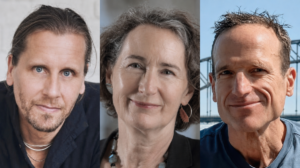
Beau Lotto of Hummingbird Learning Lab, Piers Taylor of Invisible Studio and Julia Barfield of Marks Barfield Architects are hosting an interactive brainstorm exploring ways to help clients get radical projects off the ground, and to challenge the conventions that hinder collaborative, regenerative design. Key questions include:
How can collaborative relationships foster creativity without duplicating effort and costs?
How can clients ensure that everyone’s work is properly valued and rewarded without loading the project with unrealistic expectations and costs?
What alternatives are there to the siloed working and adversarial culture embedded in traditional models of appointment, procurement and insurance
How can funding, fees and incentives be aligned to minimise costs and carbon while unlocking the full potential of regenerative design?
Partner: HDR
Tickets £15. Free for students

Wednesday 28 October | 8.30–11.30am
Mainstreaming regenerative design
Breakfast roundtable
Boardroom
Where are the opportunities for, and what are the barriers to, unlocking the potential and benefits of regenerative design at scale? To what extent can we square the circle of regenerating our cities to become resilient net-positive places that give back to communities and nature within our current economic model?
Partner: HKS
Invitation only